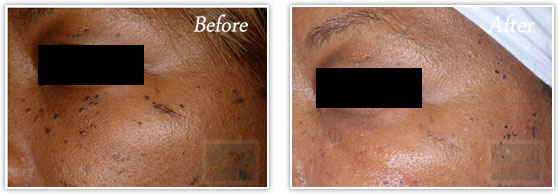
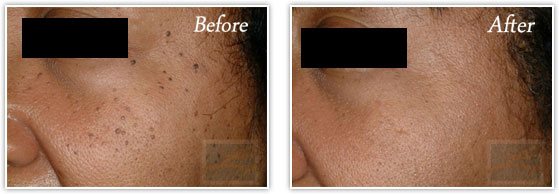
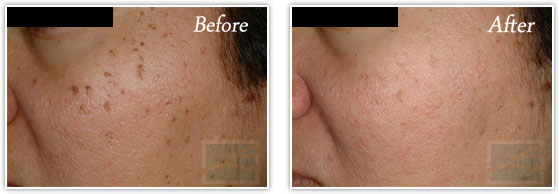
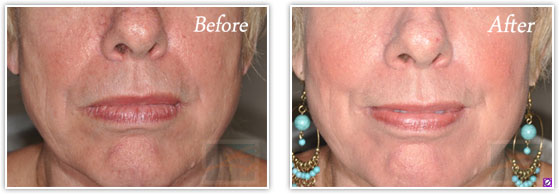
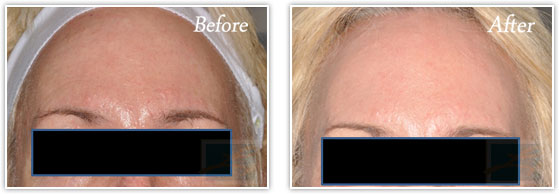
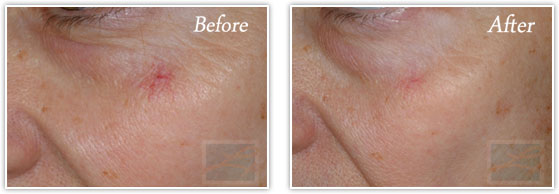
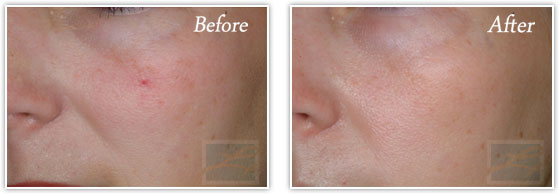
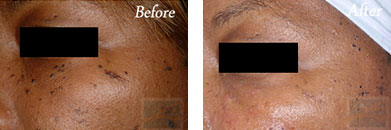
Dr. Lupo began using the Iridex 532 nm VariLite Laser in 1999. Since then, this laser technology was purchased by Cutera and has been refined, and now Dr. Lupo uses the most updated version: the Cutera 532 nm VariLite Laser. This laser precisely targets and treats small, benign pigmented spots and small dilated blood vessels on the surface of the skin. The laser generates an intense beam of light that targets the treatment site. The laser light is absorbed by oxyhemoglobin (bright red blood cells carrying oxygen) or the melanin (black or brown pigment found in the skin) causing decomposition or destruction by heating the unwanted cells while leaving healthy cells intact.
At the
Lupo Center, we treat the following skin conditions with the 532 nm VariLite Laser:
Vascular Lesions
Telangiectasia – small, surface veins caused by dilation of capillary vessels or arterioles
Pigmented Lesions
- Dermatosis Papulosis Nigra (DPN) – small, black raised lesions seen primarily on people of Asian or African descent
- Freckles – brown spots on the skin; common on people with fair skin
- Lentigines – flat, brown spots on the skin: present on skin with frequent sun exposure
Each procedure only takes a few minutes and the results are almost immediate without bruising or discoloration. The safe and easy treatment allows patients to resume to normal activities with little risk of side effects. To learn more about the 532 nm VariLite Laser, browse through our gallery of results or
call our office today to set up a consultation with one of our doctors.
Related Videos
532 laser treatment to remove unwanted Dermatosis Papulosa Nigra known as DPN
So today, Stacy, our employee of the month, is getting her requested favourite procedure. We are using the IRIDEX 532 laser for her dermatosis papulosis nigra. DPN is a very common condition in African Americans and it's somewhat upsetting to them because you get them as you get older and when you get things as you get older, it makes you feel like you look older. So, we like to take care of this problem electively, with a laser that has a great history of efficacy with little or no side effects or complications. Prior to this laser, Stacy had had this treated by other modalities and had complications of discoloration that lasted for several months. So, with this procedure, she has a little bit of crusting that lasts for a few days. It's very important that the patient afterwards not do anything to knock off the scabs too quickly. Let them heal on their own. So, avoid buff puffs and scrubs, and most importantly, continue to use your daily sun protection. So here we go. Yet patient has to have glasses on, as do I, and what I like about this particular laser is it's very small, 1 millimetre spot size. You can see some of the lesions that we had just treated. They get a little erythematous, which means red, and then they get a little bit of crusting, and then they'll fall off in about four to seven days. We'll be sure to post some before and after pictures next week.
Lupo Center for Aesthetic and General Dermatology
Mary P. Lupo, M.D. - Connect on Linkedin
Our mission at the Lupo Center is to provide patients with innovative, effective and ethical care to make each person look and feel their personal best. To fulfill our goal, we provide state-of-the-art medical, surgical and cosmetic treatments to all patients.
Board certified dermatologist and clinical professor of dermatology Mary P. Lupo, MD has been a leader in the field of non-surgical rejuvenation since 1983. She travels internationally to teach her innovative techniques, and her reputation brings in patients from around the country. She started the first formal residency training program for injectables and peels in 1983 at Tulane Medical School and served as past president of Women’s Dermatologic Society, adjunct professor of dermatology at Tulane and a founder of Cosmetic Boot Camp. Dr. Lupo holds membership in many prestigious dermatology associations, participates in clinical trials for approval of new drugs and devices and acts as an advisor for numerous aesthetic-minded companies.